

Development Contributions
As of 1 July 2026, the council's Utu Whakawhanake - Development Contributions Policy 2025 has been in place. This introduces development contributions for the first time since 2015, so you may need to include these charges in your building plans.
Development contributions are charges levied by councils on developments that create additional demand for infrastructure. These contributions help fund new or expanded infrastructure – such as roads, water supply, wastewater, stormwater drainage, and community facilities – required to service growth.
The policy helps to ensure the costs of infrastructure related to growth are shared by those creating the demand, rather than falling mainly on ratepayers. There is also a requirement that contributions collected within a specific catchment must be spent on capital projects within that same area, improving transparency and local fairness.
The newly adopted Utu Whakawhanake Development Contributions Policy 2025 (Policy) includes demand generated by new subdivisions, buildings, or changes in land use that require resource consent, or building consent (e.g. converting a residential property into a commercial one). Under the policy, development contributions may be required when:
- A resource consent is granted.
- A building consent is granted.
- A Certificate of Acceptance or granny flat exemption is issued.
- An authorisation for a service connection is granted.
- If the application or request is submitted on or after 1 July 2026.
- The development meets the test in clause 15.1 of the policy.
The full policy can be viewed here.
Credits
Credits recognise existing demand and past contributions, so that developments are not charged twice for the same level of service. These are not automatic and may only be applied in circumstances set out in clause 18 of the policy.
Where a qualifying development or financial contribution has already been paid, or an existing level of demand has been clearly established for the site, the council may apply credit to reduce the development contribution payable provided demand generated by a new or intensified development is higher than the credited demand as determined under clause 17 of the policy.
If a new or intensified development creates more demand than that recognised level, development contributions may still be charged in addition to any credit applied for the extra capacity required, even if there was a consent in place before 1 July 2026.
Remissions and exemptions
Some developments may be partially or fully remitted, or exempt, from development contributions under specific criteria in the policy (for example, certain Māori land or statutory exemptions). For details, including eligibility and how to apply, refer to Part D (Remissions, postponements and refunds) and clause 32 (Exemptions) of the policy.
If you disagree with an assessment
If you disagree with the assessment of your development contributions charges, you can ask the council for a reconsideration. You must do this within 10 working days of receiving the assessment notice.
The council’s policy, under clause 28.1, outlines the grounds upon which you can ask for a reconsideration. You can apply using one, some or all of these grounds:
- the amount was incorrectly calculated or assessed under the Policy
- the council incorrectly applied the Policy
- the information used to assess development contributions charges was incorrect or incomplete.
To request a reconsideration:
- fill in this form stating which ground/s you are making the application under
- provide any additional information to support your request and attach supporting documents
- send the form to DCFSupport@fndc.govt.nz.
The council will let you know its decision within 15 working days of receiving all the required information.
Another course of action, if you disagree with your development contribution notice/fees, involves lodging an official objection. Please read on for the deadlines involved.
You must notify the council of an objection within 15 working days of receiving:
- its initial assessment of development contributions charges (the official notice). This would mean going ahead with an objection instead of a reconsideration
- receiving the outcome of your reconsideration review.
During the objection process, you pay for an independent commissioner to hear your objection under the Local Government Act.
You can find the grounds for lodging an objection under section 199D of the Local Government Act.
To lodge an objection:
- fill in this form stating the ground/s
- state the outcome you are seeking and whether you would like to speak in person on your objection
- provide other information relevant to your objection and attach supporting documents
- send the form to DCFSupport@fndc.govt.nz.
You can read more about objections in the council’s policy, in clauses 29.1 to 29.
When your project is complete, and before the council issues final sign-off documents or certificates, an invoice for development contributions will be issued for immediate payment.
Catchment areas
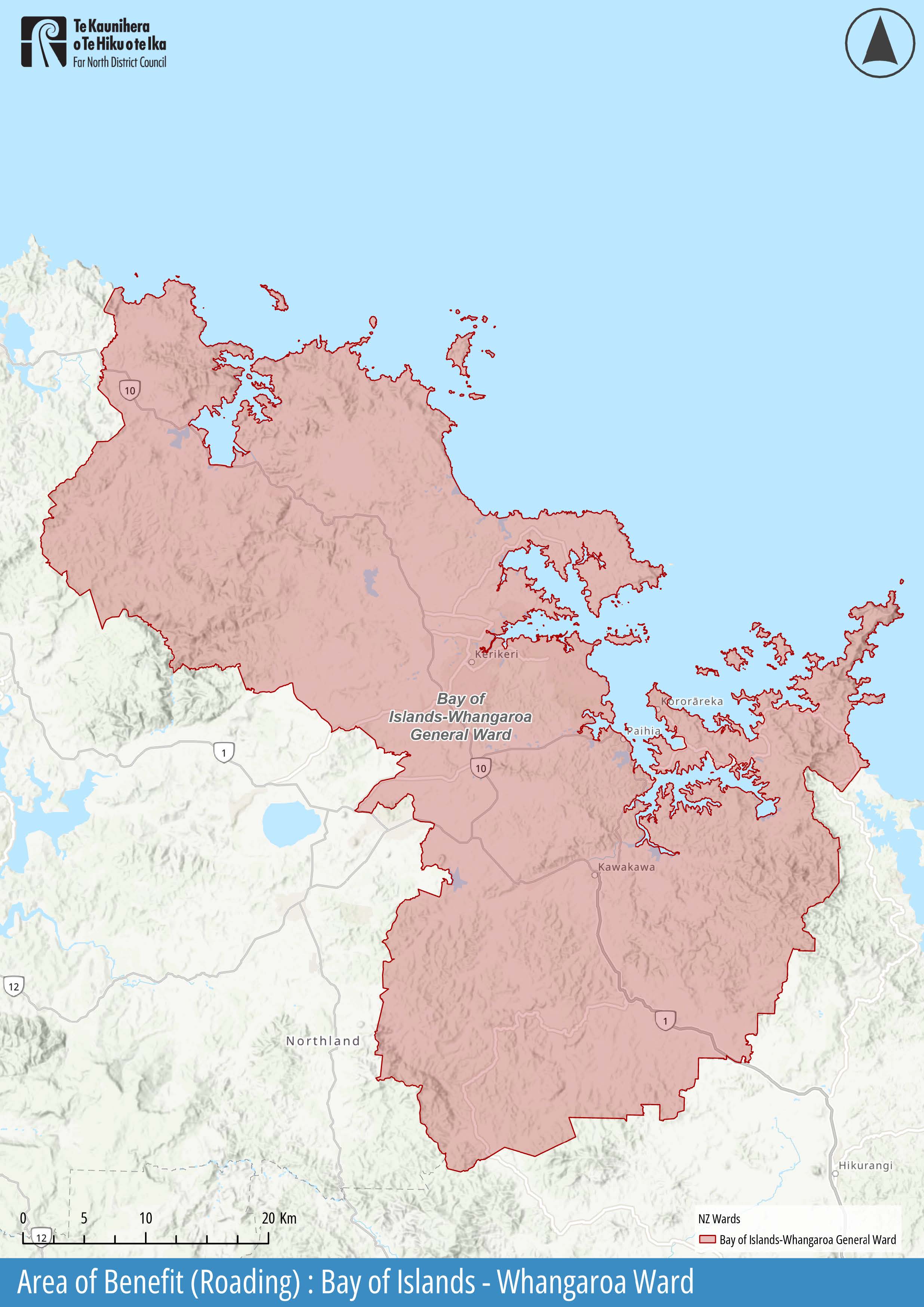
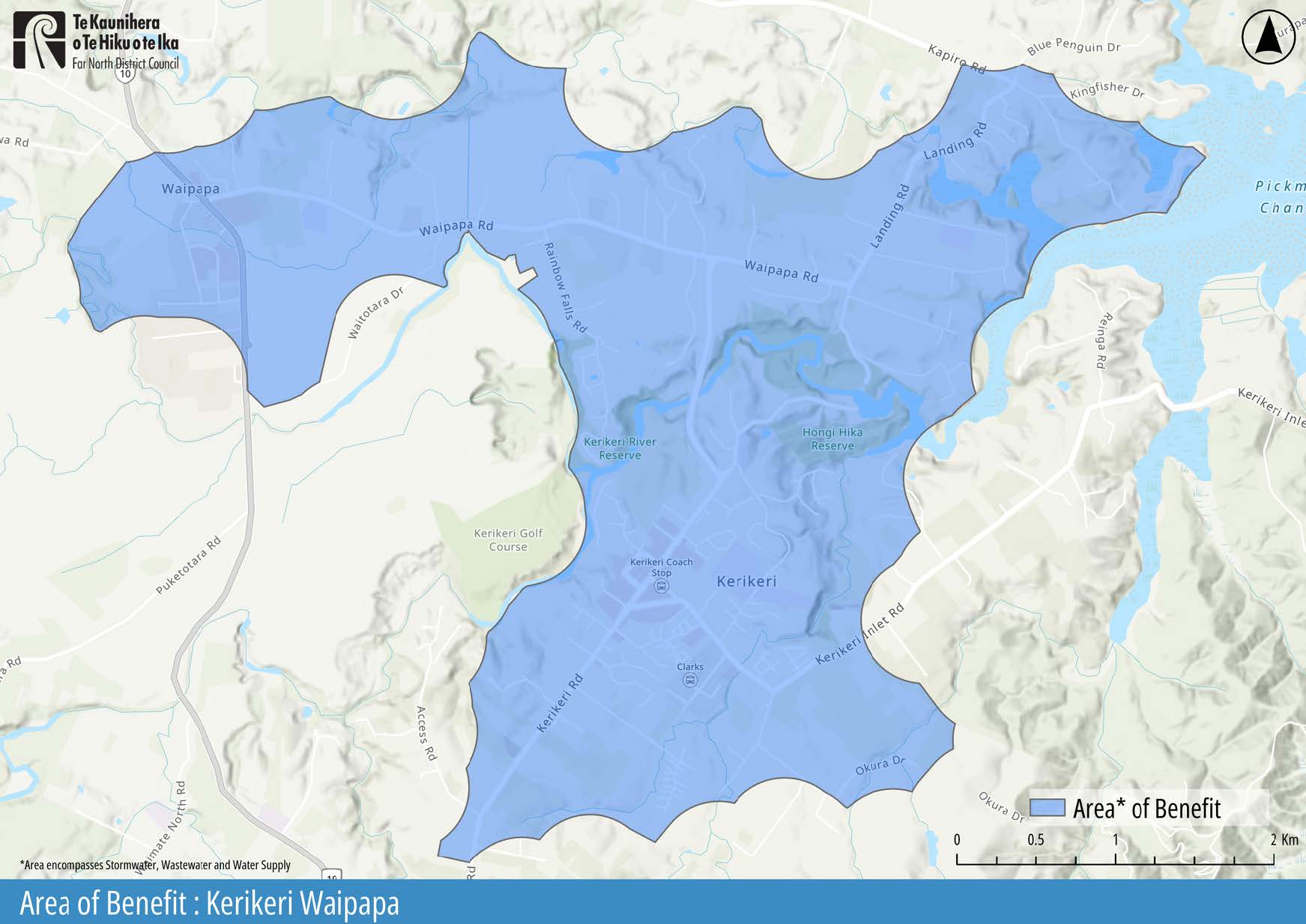
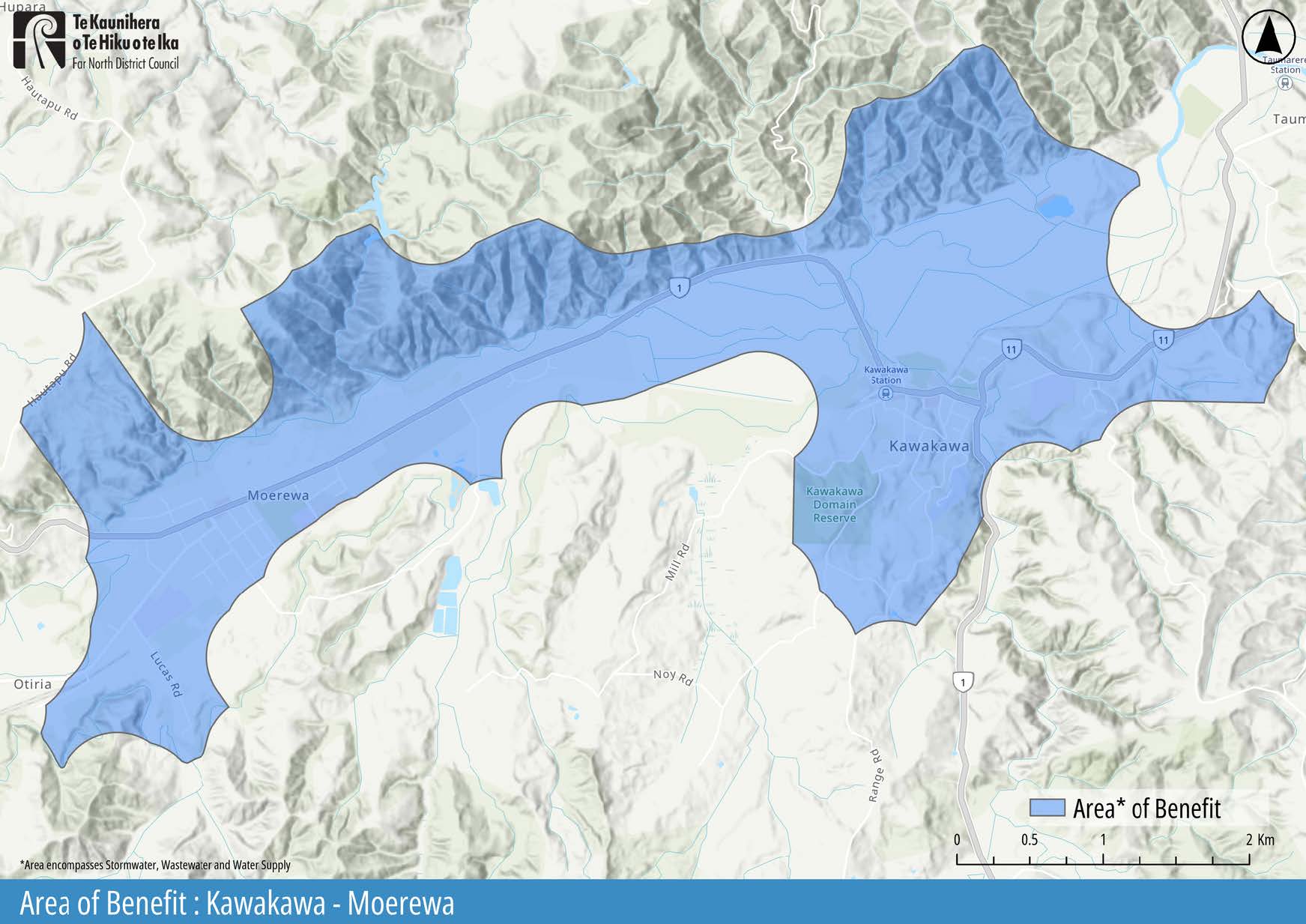
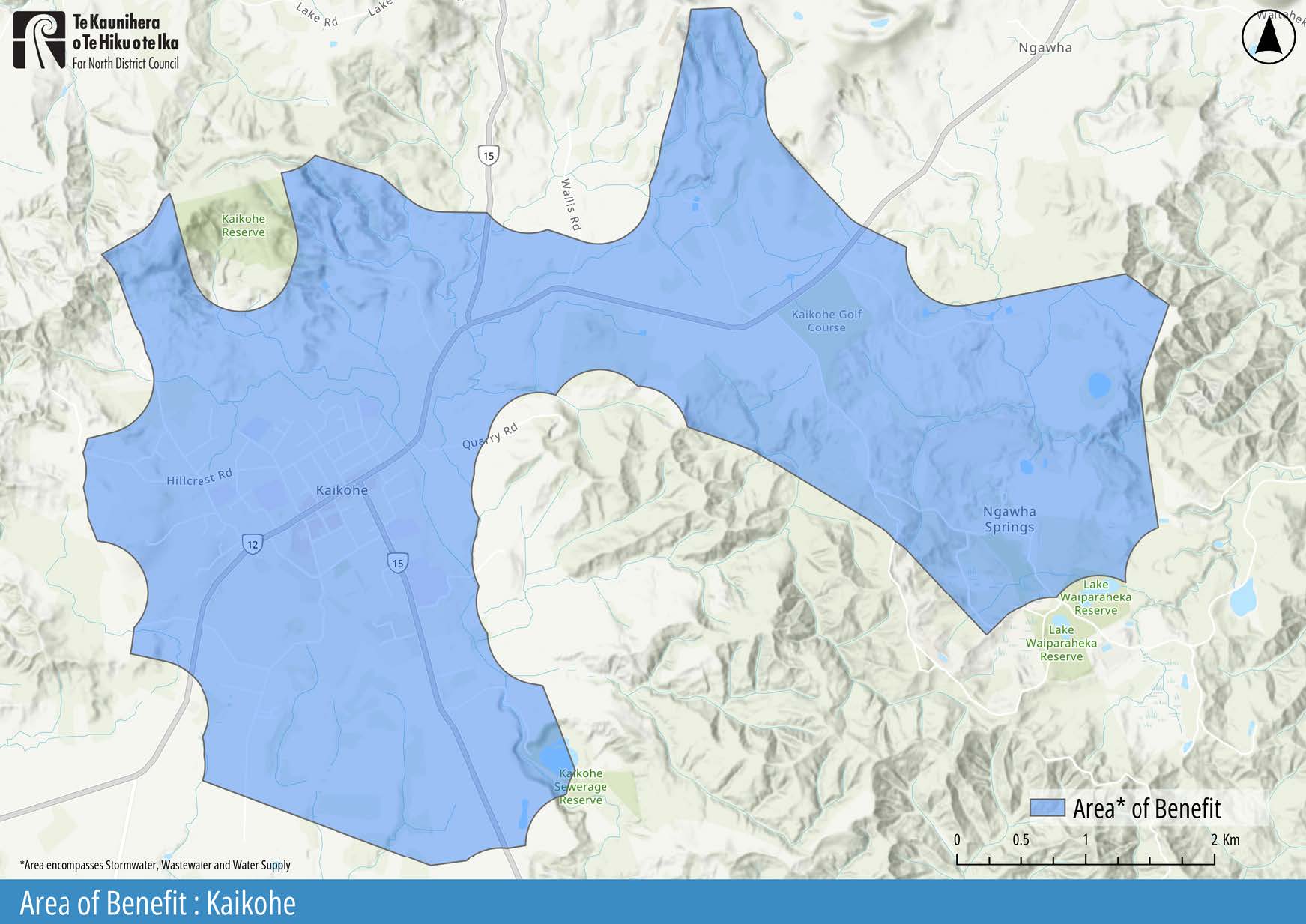
Currently, you will only be charged a development contribution if your project is within any of the four catchments mapped below. If your project is outside these areas, you do not need to pay a development contribution.
Unsure what charges apply to you?
If your property is in one of the catchments above, you can find out more by using this interactive map.
Just click through to the map and enter the address to see an estimate.
It's important to note that any charges you see outlined in the map are estimates only. The council assesses your actual development contributions payments when it considers your consent application.
Need to know more?
There is more information in the council’s policy about how it calculates development contributions charges.
You can also email us at DCFSupport@fndc.govt.nz with further questions.