

Traffic Management
Corridor Access Request (CAR)
A Corridor Access Request (CAR) is an application for a permit to carry out works within the road corridor.
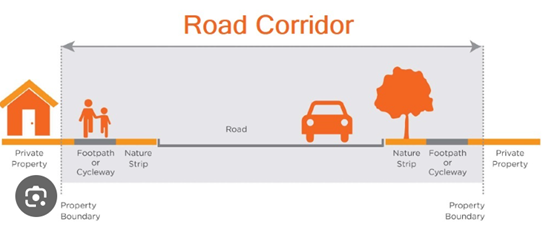
Organisations and private contractors will need to have a CAR if they are working within the road reserve. The road reserve or road corridor includes the road carriageway, footpath, berm or grassed area (from boundary to boundary), usually the front fence of a property boundary, across the road to the opposite front boundary. This includes all work in, on, along, over, across or under the road.
A CAR is required for any activity that:
- Alters or creates the need for alterations to the surface of any part of the road corridor - road, footpath, berm
- Changes the everyday way road users - pedestrians, motorists, cyclists - would ordinarily use that section of the road corridor.
To apply for a CAR, log on to Submitica or create a logon. This is a free service.
Please ensure you have the following documents on hand for the application:
- Traffic management plan
- Works plan - diagram, map or photo with a design or indication of how your traffic management is managed. A photo or snapshot from Google Maps is acceptable to show the scope of the works.'
- A copy of any public notification, if applicable eg notice to residents if disruption is to occur or if it relates to an event
- Risk Management Plan
- Traffic Management Forms
NOTE: If you are going to be excavating and unsure of what services there are underground, head to beforeUdig. This is a FREE online service to obtain information on the location of cables, pipes and other utility assets in and around any proposed dig site.
Traffic Management Plan (TMP)
A Traffic Management Plan (TMP) describes proposed works, design, set up, and the removal of any activity being carried out on a road or within the road reserve. It also includes the work programme, how public and contractor safety will be managed, and any contingency planning.
Any work that alters the normal operating conditions of the road or road reserve requires a TMP. Examples include:
- Excavating a road or footpath
- Events - these may also require temporary road closures
- Obstruction of footpaths such sign writing, scaffolding, painting etc
- Vehicle crossings
- Connection of services eg power, telecommunications, gas and water
- Scaffolding affecting pedestrians
Temporary road closures
To apply for a temporary road closure, you must apply in writing at least 8 weeks before the proposed start date and time, stating the affected area of proposed closure. Please use the temporary road closures application form. The information will be assessed by the council, NZ Police and Intercity. A Notice of Intention to Consider a Temporary Road Closure will be published in the local papers. If no objections are received and the closure is approved, a Notice of Closure will be published. The applicant will be invoiced for processing and advertising costs. See Fees and Charges.
Section 342 and the Tenth Schedule of the Local Government Act 1974 gives councils the power to temporarily close any road to traffic (including pedestrian traffic). Councils can do this for parades, tree felling, sporting events etc. after consultation with the Police Traffic Safety Branch. The council is required to give public notice of its intention to consider temporarily closing a road, and again once the decision is confirmed to close it.
What if it is a State Highway?
State Highways are not within the scope of Far North District Council's operations. Applicants will need to approach the New Zealand Transport Agency.
Standard conditions for temporary road closures (e.g. for street parades) include:
- The applicant shall provide a traffic management plan for the approval of the Roading Manager, detailing the proposed re-routing of traffic, the effects of such re-routing of traffic flows, and the provision of signage, barriers and marshalls.
- The organisers must provide access to the area at all times for residents and emergency services.
- The organisers must advise all residents and/or business owners that may be affected by the closure.
- The organisers shall be responsible for repairing any damage to the road and clearing up all rubbish after the event.
- In extreme weather conditions, the Roading Manager reserves the right to cancel the event.
- The Payment of the council’s $50 Temporary Road Closure application fee and the payment of advertising costs.
- Special conditions on larger events
- Additional conditions that may apply to Rallies etc.
- The Applicant shall advise all persons on the attached list to be provided.
- The Applicant shall provide a traffic management plan for the approval of the Roading Manager, detailing the proposed re-routing of traffic, the effects of such re-routing of traffic flows, and the provision of signage, barriers and marshalls.
- The Applicant to arrange public liability insurance to the value of $1,000,000 for the event.
- The Applicant to pay the council a road damage bond of $1,000 [one thousand dollars] per road closed.
- The payment of the council’s $100 Temporary Road Closure application fee plus advertising costs, and an additional fee of $50 per Ward if the event crosses Ward boundaries.
Additional conditions that may apply to tree felling:
- The Applicant shall provide a traffic management plan for the approval of the Roading Manager, detailing the proposed re-routing of traffic, the effects of such re-routing of traffic flows, and the provision of signage, barriers and marshalls, and the use of machine assistance to keep trees within forest boundaries at all times.
- The Applicant shall ensure clearance of all branches and vegetation are cleared from the road, verges and water tables after the work.
When the work is approved the council will issue a WAP which will include conditions. A council-nominated engineer will inspect the site to ensure safety standards and reinstatement standards comply with the relevant codes for working on the road (SNZ HB 2002:2003 and the council’s Schedule of Special Conditions). At the end of the warranty period we will either sign off the warranty or request further works.
Find road closures, incidents, roadworks and traffic cameras across New Zealand with NZTA's traffic map, click here to view their road closure map.
Bridge weight limits and speed restrictions
The council owns and maintains 732 bridges on the local road network. Timber bridges and bridges with weight and/or speed restrictions are inspected annually. All other bridges are inspected on a three-yearly cycle. These inspections identify where maintenance is required, and which bridges need to be replaced. Where necessary, we do structural analysis and weight and/or speed restrictions are posted on the structure to ensure safe use of the bridge.
Weight and/or speed restrictions
Numerous bridges within the Far North District have weight and/or speed restrictions for heavy vehicles due to their structural condition. All other bridges are able to convey the loads that are legally allowed on roads as described in the Vehicle Dimensions and Mass (VDAM) Rules published by the New Zealand Transport Agency (NZTA), with the possible exclusion of 50 MAX heavy vehicles.
View the weight and/or speed limits on bridges (PDF | 0.73 MB)
NZTA administers use of the Far North's network by 50 MAX vehicles. You can view NZTA’s 50 MAX information online, including a map showing bridges that 50 MAX vehicles are not permitted to cross.
Vehicles exceeding the weight limits in the VDAM Rules are not allowed to cross any Far North bridges unless an Overweight Permit is obtained in advance. To request an Overweight Permit, contact Council's Bridge Engineer, via WSP on 09 430 1700. There is a fee for the situation to be evaluated.
If an operator damages a bridge while crossing or considers that a bridge is unsafe to use, please report this by phoning 0800 920 029 (24 hours). Ensure the Customer Services Officer knows that this is emergency works so they can contact the contractor and ensure an immediate response.
Far North bridges are part of a continual improvement programme under our Bridge Improvement Strategy. There is a cost involved in assessing all our bridges. Until they have been assessed it is our responsibility to err on the side of caution and allocate weight limits. If a bridge that has not been assessed is critical to an operator’s activity, we are willing to work with operators on a case-by-case basis.